How AI Is Changing the Hiring Landscape in Japan (2026)
AI is not a future trend in Japan.
It is a present concern.
AI is changing how companies evaluate talent now.
It is changing how you prepare for interviews.
But, do you know what skills are becoming valuable?
For engineers, product designers, and business-side professionals, the question is no longer simply, “Can you do the job?”
It is, “How do you use AI to do the job better?”
At Build+, we speak with jobseekers and hiring teams across Japan every day.
One pattern is becoming clear: AI is not replacing strong talent, but it is changing what strong talent looks like.
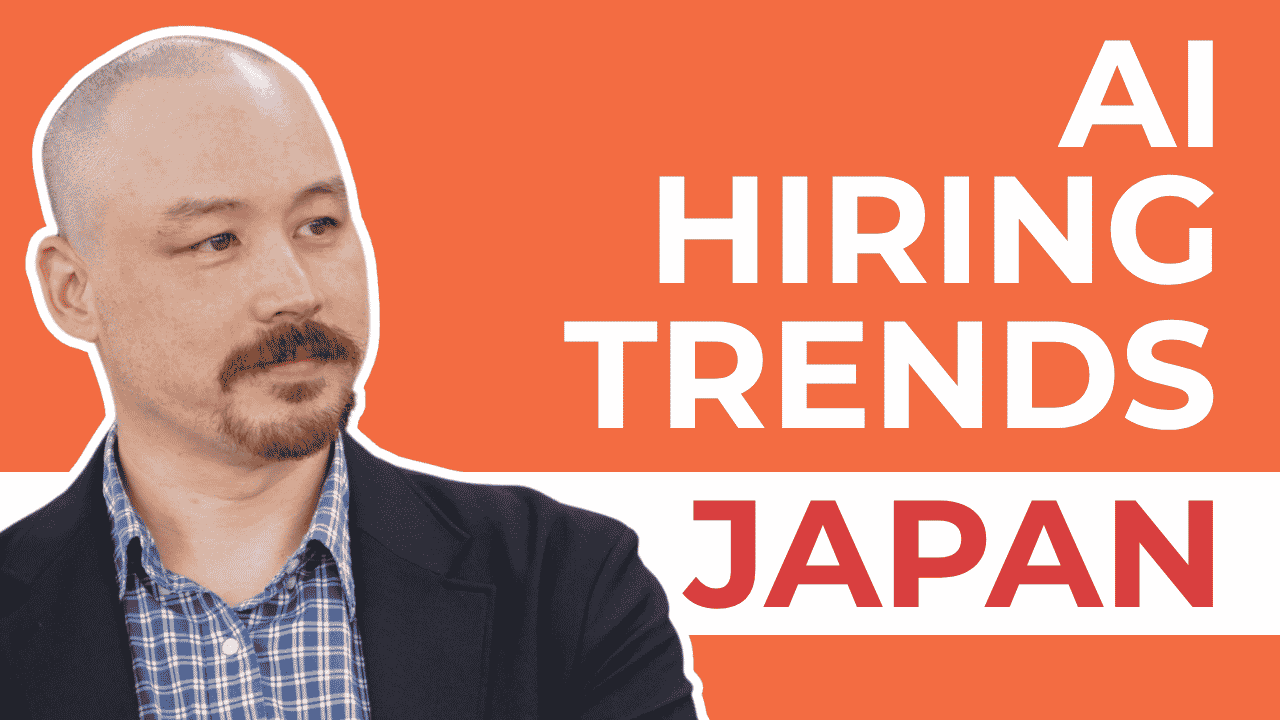
In this episode of Tech Careers Japan, Bryan Rios from Build+ sat down with Thomas Simmons, who manages Build+’ frontend, backend, and design recruitment teams, to talk about what he is seeing across Japan’s hiring market.
Thomas works closely with both candidates and clients.
He has a clear view of how expectations are shifting.
The conversation covers:
How AI is changing interview processes
What companies now expect from engineers and designers
Why junior roles are becoming harder to find
How you can futureproof your career in an AI-driven market
Here is what Thomas had to say.
AI Skills Are Becoming a Baseline Expectation
One of the biggest changes Thomas has seen in hiring is that AI tools are moving from “nice to have” to “expected.”
In the past, technical interview processes were designed to test what you could do completely on your own.
Candidates were asked to complete coding tests without notes, outside tools, or AI assistance.
Companies used monitoring tools.
That has changed.
Companies understand that AI tools are part of the real working environment.
If engineers, designers, and product teams are using AI in their day-to-day work, it makes sense to evaluate how they use it.
Instead of asking, “Can you solve this without any help?” companies are asking, “What can you build when you use the tools available?”
That shift is important.
It means AI is not seen as cheating.
The expectation is that you know how to use it well.
Of course, this depends on the company.
Interview processes still restrict AI use when they want to test core technical fundamentals.
But the overall trend is moving toward practical assessments that reflect how modern teams actually work.
For you, this means you need to be ready to explain not only your technical choices, but also how you use AI.
Companies want to see you:
Prompt effectively
Review the output critically
Catch mistakes
Turn AI-assisted work into reliable production-ready results.
Senior Engineers Need More Than Technical Skill
AI has not removed the need for strong technical ability.
Senior engineers need to understand:
Architecture
Scalability
System design
Security
Code quality
Long-term maintainability
However, the way to stand out as senior talent is changing.
As AI handles repetitive or isolated technical tasks, companies are placing value on the skills that AI cannot replace: communication, judgment, stakeholder management, and business thinking.
For senior engineers in Japan, this is important.
Companies are not only looking for people who can write excellent code.
They want people who can explain technical decisions to product managers, business leaders, customers, and non-technical stakeholders.
This is also affecting language expectations.
A few years ago, engineering roles in Japan were flexible about Japanese language ability, especially if the company had an English-speaking engineering culture.
Now, Japanese communication ability is important.
Senior engineers are expected to work closely with business stakeholders.
That does not mean every role suddenly requires native-level Japanese.
But it does mean that communication is becoming harder to separate from seniority.
A strong senior engineer today needs to be able to answer questions like:
How will this technical decision affect the product?
How will this reduce cost?
How will this improve customer experience?
How will this help the company move faster or generate revenue?
The best applicants are not only talking about tools and frameworks.
They are connecting technical work to business outcomes.
AI Is Putting Pressure on Junior Hiring
One of the difficult realities of the current market is that junior roles are harder to find.
Tasks that junior engineers or junior designers traditionally handled are now easier to automate.
That does not mean junior talent is no longer needed, but it does mean companies are being more selective about junior hiring.
Instead of hiring large teams with several junior members, some companies are shifting budget toward fewer, more senior hires who can use AI tools to produce more output.
For senior candidates, this creates stronger salary opportunities.
If a company reduces the total number of headcount but still needs high output, it will be willing to pay more for experienced people who can lead, execute, and use AI effectively.
For junior candidates, the market is challenging, but not hopeless.
In fact, junior candidates have one major advantage: they can position themselves as “AI-native”.
Experienced engineers have established habits, workflows, and ways of thinking.
Adapting to AI-assisted development requires them to unlearn older processes.
Junior candidates, on the other hand, can build their skills around AI from the beginning.
If you are early in your career, this is where you stand out.
You should experiment with AI tools, build projects, learn how to validate AI-generated work, and show that you learn quickly.
You should practice speaking in business terms.
Do not say, “I built this feature.”
Explain who it helps, what problem it solves, and what outcome it creates.
That kind of thinking helps junior jobseekers compete in a market where companies are hiring fewer entry-level people.
“Soft Skills” Are Becoming Hard Skills
One of the clearest changes in AI-era hiring is the growing importance of communication.
For technical candidates, this feels counterintuitive.
If AI can help with writing code, translating documents, and summarizing information, you would expect communication barriers to become less important.
But in practice, the opposite is happening.
As AI speeds up execution, the value shifts toward people who can ask the right questions, understand the real problem, and align different stakeholders.
This is why communication is becoming one of the most important skills in interviews.
A common mistake is trying to answer too quickly.
Especially in technical interviews, people want to prove they are smart by immediately jumping into a solution.
But companies want to see how you think before you answer.
When you are given a problem in an interview, you can stand out by asking questions such as:
What have you already tried?
What tools or systems are currently available?
Which teams are involved?
Who are the stakeholders?
What does success look like from the product or business side?
What constraints should we consider?
These questions show that you are not solving a technical problem in isolation.
You are thinking about the users, the product, the business, and the team.
That is exactly the kind of thinking companies want.

AI Adoption Is Creating Two Different Problems Inside Companies
Thomas talk about how people are paying attention to how companies use AI internally.
There are two opposite problems emerging.
Companies are using AI too aggressively.
This happens when leaders see the speed of AI-generated output and start pushing teams to move faster without attention to quality, reviews, testing, or security.
For engineers, this is frustrating.
AI helps you move faster, but it does not remove the need for code review, architecture decisions, quality checks, and long-term maintainability.
If companies skip those steps, they create technical debt or security issues that become expensive later.
On the other side, companies are using AI too cautiously.
In these companies, access to AI tools is limited to engineering teams only.
Designers, HR teams, sales teams, marketers, and business leaders do not get access, even though AI improves their work.
That becomes a talent issue.
People want to join companies that are modern, practical, and open to better ways of working.
If a company restricts AI too much, it looks slow to ambitious candidates.
The best companies are finding a balance.
They give teams access to AI tools and create clear expectations around security, review, ownership, and responsible use.
Designers Are Being Affected Differently Than Engineers
For engineers, the connection between AI and productivity is obvious.
AI can help with coding, debugging, documentation, testing, and technical research.
For designers, the impact is a different.
AI is useful in UX research.
Designers need to process large amounts of qualitative data from user interviews, surveys, and feedback sessions.
AI helps identify patterns, summarize insights, and speed up the creation of user stories.
However, AI does not replace the human side of design.
Good design requires empathy, taste, brand understanding, emotional intelligence, and a deep understanding of users.
AI generates options, but a skilled designer needs to decide what works, what feels right, and what fits the product.
There are also ownership and copyright concerns around AI-generated assets.
Companies cannot simply push AI-generated visuals directly into production without thinking carefully about rights, originality, and brand consistency.
For designers, the opportunity is not to let AI do the work for you.
The opportunity is to use AI to iterate faster, explore ideas, and spend time on the strategic and human parts of design.

Recruiters Still Matter, But the Role Is Changing
AI is affecting recruitment itself.
It is now easier than ever to apply to large numbers of jobs.
It is easier for companies to screen large numbers of applications.
That creates a new problem: more applications, more noise, and less human attention.
You are already experiencing instant rejections that feel too fast to have been reviewed by a person.
As AI screening becomes common, getting your resume in front of an actual hiring manager will be difficult.
This is where recruiters matter.
AI supports parts of the recruitment process, but it cannot replace trust, negotiation, and access.
A recruiter builds relationships with hiring managers.
They understand what a company is really looking for beyond the job description.
They explain why a person is worth meeting, even if the resume does not perfectly match every keyword.
Recruiters also play an important role in negotiation.
AI gives you salary negotiation advice, but it cannot read the room.
It does not know the hiring manager’s personality, the company’s flexibility, or how aggressive you can be before you put an offer at risk.
In an AI-driven hiring market, recruiters become more valuable because they help you get seen by human decision-makers.
Can You Get a Flutter Job in Japan With No Japanese?
Yes, it is possible.
But your strategy matters.
If you are outside Japan, have no Japanese ability, and have no strong connection to Japan, finding a role will be more difficult. Not impossible, but the probability is lower.
If you are already in Japan, even with limited Japanese, you may have a better chance — especially if you are active in the local tech community.
Reyna’s advice is to get in front of people:
Attend tech meetups
Go to engineering events
Network with other developers
Speak with recruiters who understand the Flutter market
Build relationships with companies and hiring teams
Tokyo’s tech community can feel surprisingly small. A conversation at the right event can lead to an opportunity that may never appear on a job board.
Final Thoughts
AI is changing the hiring landscape in Japan, but not in a simple “AI will replace everyone” way.
The bigger shift is that AI is changing what companies value.
Technical skills still matter.
Design skills still matter.
Human judgment still matters.
But you now need to show that you use AI effectively, communicate clearly, think commercially, and adapt quickly.
For companies, AI creates an opportunity to hire more effectively, but it also raises the bar.
If you want to attract strong talent, you need to show that you are using AI thoughtfully, not recklessly or restrictively.
For jobseekers, the message is clear: do not ignore AI. Learn how to use it, learn how to question it, and learn how to turn it into meaningful outcomes.
In Japan’s tech market, the most valuable professionals will not be the ones who compete against AI.
They will be the ones who know how to work with it.