AI/Data Jobs in Japan [2026]
Hiring Trends, In-Demand Roles, and What Candidates Should Know
We sat down with Julien, Manager of our Data & AI Team, to get a ground-level view of Japan's AI and data hiring market. From the roles companies are racing to fill, to the skills that actually matter, here's what you need to know in 2026.
Julien Huckaluk
Manager, AI & Data
Julien began his recruitment career in 2017, focusing on Japan’s banking and insurance sectors.
Drawn to the rapid growth and potential of the data and AI field, he joined Build+ as Manager of the newly established Data & AI team, connecting top talent with the industry’s most exciting opportunities.
Outside of work, Julien enjoys playing the drums and staying active at the gym.

Julien Huckaluk
Manager, AI & Data at Build+
Why Japan's AI/Data Market Is Worth Paying Attention To
Q: AI job postings have increased over 100% recently. What's driving that?
Japan is in a unique position compared to most countries. Everywhere else, the conversation around AI is about jobs disappearing. In Japan, it's the opposite. Companies are looking at AI as a way to fill them. With the labor shortage getting more severe every year, this isn't about being "techy." It's survival. Companies aren't just experimenting anymore; they're trying to keep their businesses running.
That said, it's not all growth across the board. Entry-level data scientist roles are actually shrinking, largely due to generative AI automating a lot of what those roles used to cover. So the market is growing fast in some areas and contracting in others, which is exactly why it's important to understand where the demand actually is.
Q: How has the market changed over the last few years?
The biggest shift is the mindset.
A few years ago, AI was seen as a toy, something interesting to experiment with, maybe useful eventually. Now it's a tool. Things like ChatGPT and LLMs have shown companies real, concrete ways to automate office work and manufacturing processes. The question has moved from "can we do this?" to "how do we scale this?" That shift changes everything about how companies hire and what they're willing to invest.
What Does the AI/Data Market in Japan Look Like?
Q: Who's hiring?
Broadly, you've got four categories:
Large Japanese corporations
Domestic AI startups
Foreign tech vendors
Consulting firms
In a few years, the answer will probably just be "every company". AI is going to touch every part of every organization. But right now, these are the main players.

Q: Where is the hiring most concentrated?
Traditional enterprises, the Toyotas and mega-banks of Japan, are hiring the most volume. They're not trying to invent new AI; they're focused on deploying it. Connecting LLMs to legacy internal systems, reducing headcount through automation, keeping costs down. They primarily need Data Engineers and project leads to make it actually work.
Domestic AI startups, companies like Sakana AI or LayerX, are the ones actually building from scratch. They want elite ML Engineers to create what you could call "Japanese Silicon Valley" models: AI that understands Japanese language nuance and business culture in ways that US-built models don't. These roles are very hard to fill.
Foreign tech vendors, Microsoft, AWS, Google, are investing heavily in Japanese data centers and hiring Solution Architects to help Japanese enterprise clients migrate to the cloud.
Q: Any parts of the market that people overlook?
Data Engineering!
Everyone wants to build the brain, the AI model itself, but nobody wants to build the plumbing: the data pipelines that actually feed it. There's a huge, underserved demand for people who can get data clean and moving.
A few years ago, candidates were worried that data engineering would be replaced by AI. Right now, it's one of the highest-demand areas we work on. Salaries are going up too, precisely because of how central clean data has become to everything AI-related.
Which Roles Are Companies Hiring For Most Actively?
The top roles we see consistently right now:
ML Engineers build and fine-tune the models themselves. Hard to find, high demand, especially at domestic startups.
Data Engineers handle the plumbing, building and maintaining the pipelines that feed AI systems. Roughly 30% of the data engineering roles we've worked on recently didn't require Japanese, which makes this one of the more accessible categories for international candidates.
LLM Engineers build "private AI", systems that know a specific company's internal documents and can answer questions based on them. This is currently the top priority for most Japanese enterprises.
MLOps Engineers are the mechanics. They keep models running 24/7 at scale without costs spiraling. As more companies move from experimentation to production, this role becomes critical.
Data Scientists haven't disappeared, but the role has evolved significantly. They're no longer primarily doing research. They're now focused on measuring whether AI is actually generating value for the business.
Worth noting: a lot of job descriptions using this title are describing something closer to an AI Engineer. Always worth digging into the actual responsibilities.
AI Product Managers (AI PMs) are a major gap right now. Companies need people who understand the technology well enough to talk to engineers, but who are commercially-minded enough to define what a product should actually do. Around 90% of these roles require Japanese.
Skills That Actually Matter

Q: On the technical side, what do companies consistently want?
Python and SQL are still the gold standard!
You'll see them on virtually every JD in this space. Cloud platforms, particularly AWS and Azure, are close to mandatory at this point. Google Cloud comes up, but less frequently.
Beyond that, requirements vary a lot by role and company. The core is less about having an exotic AI-specific skill set and more about being solid on the fundamentals and being able to apply them in an AI context.
Q: What backgrounds transfer well into AI/Data roles?
The key insight here is that a lot of the most in-demand AI roles are really engineering problems with an AI layer on top.
Backend engineers are a natural fit for MLOps or Data Engineering. If you have strong Python and development fundamentals, the transition is very achievable. Infrastructure and DevOps candidates map well onto AI Platform roles. If you're good at systems and scaling, you're already halfway there.
For roles like AI PM, direct AI experience isn't always required yet. A strong product manager who is genuinely passionate about the space and willing to learn can still be competitive for these roles, especially right now while the market is still maturing.
One practical note: if you're a backend engineer applying for a data engineering role, don't hide that. Tell your recruiter about side projects, self-study, anything that shows genuine interest. Passion and curiosity carry real weight with clients in this space right now.
Where Is the Market Heading?
Q: What does the next few years look like for AI/Data in Japan?
Expect to see a lot more Japanese-first models. English-language models are powerful, but Japan has its own business culture and linguistic complexity that general models don't fully capture. Local models that genuinely "get" Japan are going to be the next big growth area.
On the role side, traditional titles like Data Scientist and Data Analyst are becoming less meaningful. What we're seeing is a fragmentation into more applied, engineering-focused positions like AI Engineers or ML Engineers with companies prioritizing deployment over pure analysis. The trend may actually push things toward more generalist titles over time: people who can take a research idea all the way through to a working product, rather than specialists who only own one part of the chain.
Q: What skills will matter most going forward?
Two things stand out.
First, full-stack thinking, the ability to move from a research concept to something that actually runs in production.
Second, AI ethics and governance. As AI gets more powerful and regulation increases (Japan is already quite careful about this), knowing how to keep systems safe and compliant will become a high-value niche.
The other thing, and this applies across every role, even highly technical ones, is communication. The most valuable people in this market will be the translators: people who can sit with a CEO or a factory floor manager and explain why a particular model is worth the investment, or where the risks are. In Japan especially, the ability to build trust and explain the "why" behind the data is often what determines whether a project gets the green light or gets buried.
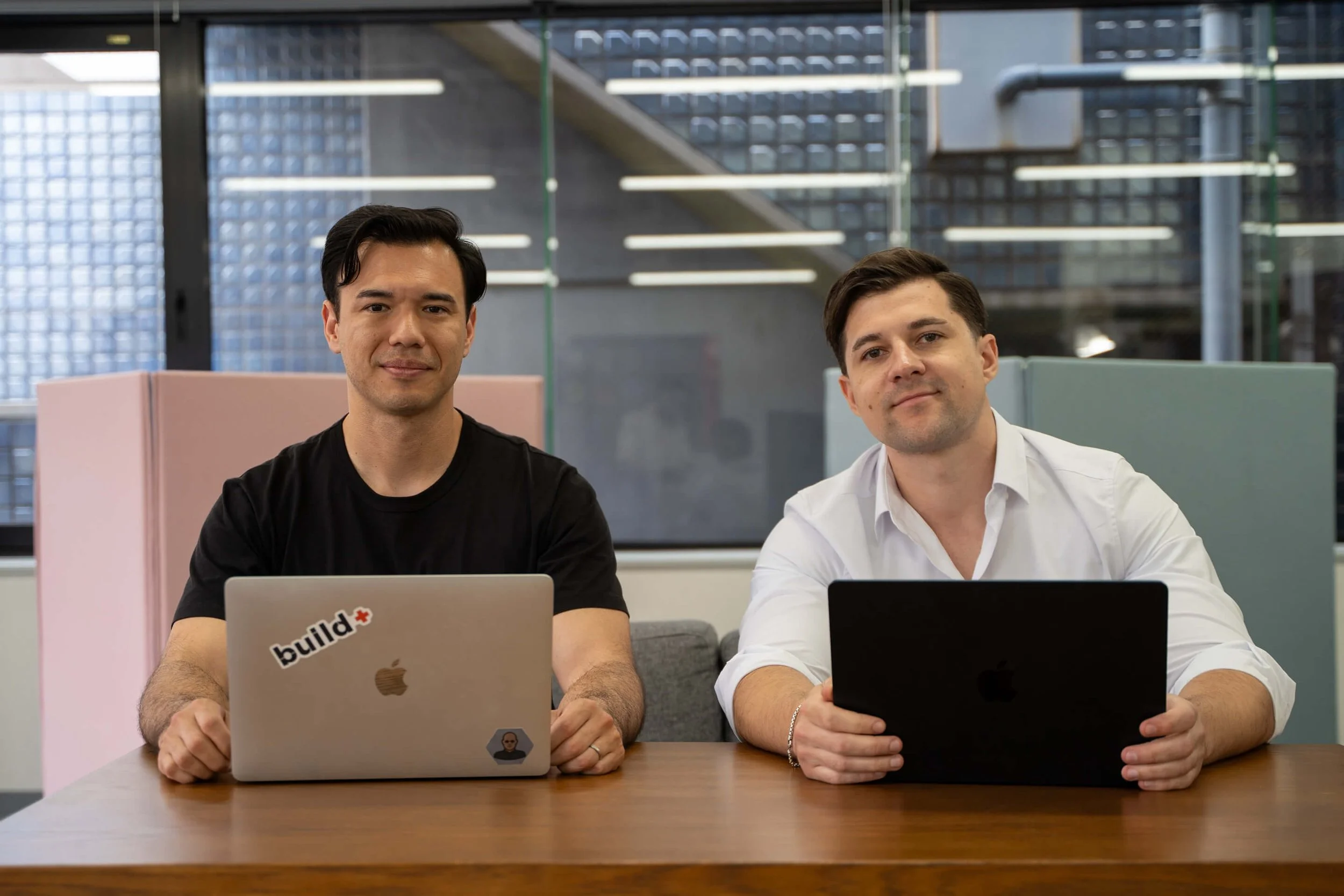
Interviewer: Anju Kajihara, Guest: Julien Huckaluk
Interested in AI/Data roles in Japan?
Reach out to the Build+ AI & Data Team.
We're happy to walk you through what's available and what you'd need to be competitive.
Are you hiring in Japan? We can help you, too!