8 Things Every Founder Should Know About Hiring in Japan
Hiring in Japan is a puzzle.
Especially as a startup with no brand recognition.
Visas, culture, candidate expectations, and market shifts all add complexity.
How can you stand out in such a candidate driven market?
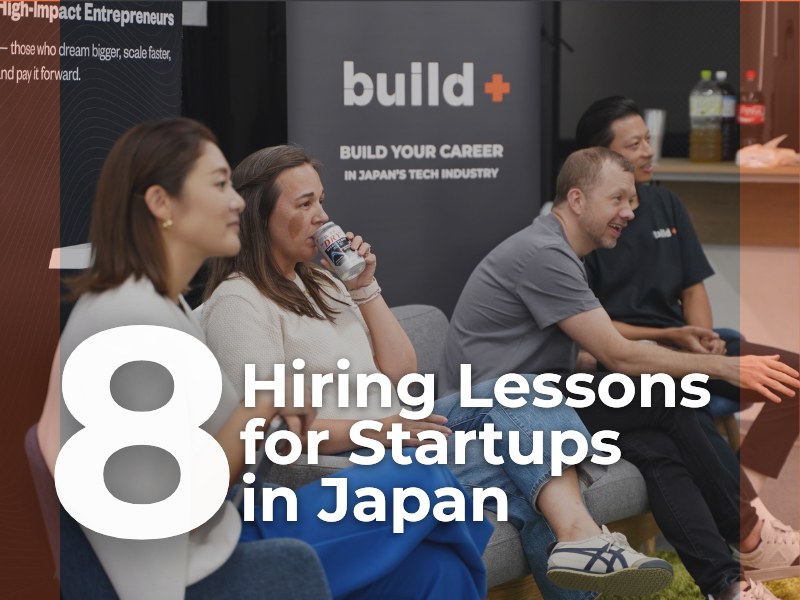
These are the kind of questions we answered at our recent in-person AMA.
We partnered with Endeavor, a global community that offers mentorship to scaleups and startups, to answer any and all questions that their founders had about hiring global talent in Japan.
Here are 8 lessons every startup founder—and anyone curious about startup life.

1. Visa Sponsorship in Japan: Reality vs. Perception
One of the first myths raised was that sponsoring visas in Japan is “too difficult.”
In reality, it’s not about difficulty, it’s about patience… and paperwork.
For large companies, the process is relatively smooth.
They already have HR/legal teams, tax history, and credibility with immigration.
For startups, hurdles exist.
Especially if the company is young or recently restructured (e.g. after an M&A). In those cases, immigration may request additional documents such as:
Tax records
Proof of employee continuity
Financial statements
Timelines are longer post-pandemic. Moving from eligibility checks to the Certificate of Eligibility (COE) and final visa stamping now takes around 4–6 months.
Nationality can add steps. For example, Filipino professionals must secure approval from their own government before taking a role abroad. Many founders aren’t aware of this until it causes delays.
Candidate trust is fragile. Long silences can shake confidence—even if the delay is out of your control. Regular updates, even just to say “we’re still waiting,” make a big difference.
💡 Key Takeaways for Founders:
Set expectations early. Let candidates know upfront how long it may take.
Bring in partners. Recruiters or immigration specialists with hands-on experience can help navigate bottlenecks.
Stay engaged. Treat the visa journey as a shared challenge, not something the candidate handles alone.
👉 Sponsorship isn’t a dealbreaker for startups; it’s a process. With preparation and transparency, founders can absolutely bring in the global talent they need.
2. Hiring on a Startup Budget
Another big question from founders was: “How do you compete for talent when you can’t pay big-company salaries?”
The instinct for many startups is to focus on younger, more junior candidates who will accept lower pay.
But the advice from the AMA was clear: Don’t underestimate the value of experienced professionals.
Why seniors can be a smarter choice:
They bring pattern recognition and the ability to see pitfalls before they happen.
They have the confidence to take calculated risks in messy, uncertain situations.
They can often contribute from day one, reducing the need for heavy training or hand-holding.
What motivates them:
Not every experienced professional is chasing the highest salary. Many are motivated by:
The chance to create a visible impact.
Alignment with a mission they believe in.
The freedom and ownership that come with a smaller, faster-moving company.
The real risk with juniors:
While hiring junior talent can save costs upfront, it often requires significant time from founders and senior team members to train and support them. For resource-strapped startups, this hidden cost can outweigh the savings.
💡 Key Takeaways for Founders:
Flip your perspective. Don’t just ask “Who can we afford?” Ask “Who will give us the highest return on time and resources?”
Target values-driven professionals. Look for candidates who are motivated by impact and mission, not just money.
Check mindset, not just skillset. The best fit for startups are those comfortable with ambiguity and the inevitable “messiness” of early-stage growth.
👉 Hiring for experience may feel counterintuitive on a tight budget, but in many cases, the right senior hire saves money and accelerates growth in the long run.

3. Company Culture: Define, Don’t Assume
Founders often asked: “What kind of culture should we build in Japan? Is there a standard ‘Japanese company culture’ we need to follow?”
The clear answer: there is no single Japanese company culture. Each organization is different, and what matters most is how clearly you define your own.
Why definition matters:
Culture becomes a hidden evaluation axis in hiring. If it isn’t clear, both interviewers and candidates rely on assumptions, which can easily lead to mismatches and early turnover.
The trap of vague values:
Broad words like “communication” or “teamwork” sound good but mean very different things in practice. For example, does “good communication” mean…
Quick Slack updates?
Structured weekly reports?
Direct, candid feedback?
Unless you spell this out, candidates won’t know what’s actually expected.
Startups are founder-driven:
In the early days, culture flows almost entirely from the founders’ own behavior. If you don’t actively define and communicate what kind of culture you want, one will form on its own — and it may not be the one you intended.
The candidate’s perspective:
Clear, concrete cultural definitions help candidates decide: “Can I succeed here?” The more specific you are, the more likely you’ll attract people who thrive in your environment — and filter out those who won’t.
💡 Key Takeaways for Founders:
Write it down early. Don’t wait until you’ve scaled; clarity now saves you headaches later.
Make it actionable. Define culture in terms of behaviors, not slogans.
Revisit regularly. As the company grows, check if your culture still matches how you want the team to operate.
👉 Culture isn’t an abstract idea — it’s the daily actions and decisions inside your company. By defining it early, you not only attract the right people but also create a foundation for long-term success.
4. Interview Design & Candidate Experience
One founder put it simply: “We’re a small team — how do we run interviews without wasting time or frustrating candidates?”
This is where many startups struggle. Too often, interviews turn into a string of back-to-back conversations where candidates are asked the same questions over and over. Not only does this eat into precious founder time, it also damages the candidate experience — and in today’s competitive market, a weak candidate experience can sink your employer brand.
The common pitfalls:
Repetition: Every interviewer asks the same basic questions.
Subjectivity: No consistent criteria, just gut feelings.
Lack of transparency: Candidates walk away unclear about the process or expectations.
A better way — treat interviews like a system:
Define key competencies. Narrow it down to 3–5 qualities that truly matter for the role.
Assign ownership. Each interviewer should focus on specific areas (e.g. technical skill, cultural fit, problem-solving).
Use structured forms. Capture notes consistently under pre-written questions.
Share context. Let candidates know what to expect at each stage so they feel prepared and respected.
Why this matters for startups:
A structured process shortens time-to-hire, improves decision quality, and signals to candidates that your company is organized and intentional — even if you’re still small.
The candidate’s perspective:
For many, the interview is their first real interaction with your culture. If the process feels chaotic, they’ll assume your company is too. If it feels professional and respectful, they’ll see a place they can trust.
💡 Key Takeaways for Founders:
Think system, not conversation. Structure reduces waste and improves consistency.
Respect the candidate’s time. An efficient process boosts your reputation.
Use interviews as branding. Show candidates the professionalism and clarity they can expect if they join.
👉 A well-designed interview isn’t just about evaluation — it’s your chance to win over the very people you want on your team.

5. Keeping Momentum at the Offer Stage
A founder asked: “We lost a candidate after interviews went well — what went wrong?”
It’s more common than you think. Even after a strong interview process, offers can fall apart at the very last step. And the reason isn’t always salary — it’s momentum.
Where momentum breaks down:
Hesitation inside the team before making a final decision.
Weeks of silence between a verbal “yes” and a written offer.
Mixed signals — one person says “we’re excited,” another says “we’re still deciding.”
The impact on candidates:
Candidates are usually considering multiple opportunities. If they sense hesitation or experience delays, confidence fades quickly. Excitement turns to doubt, and by the time the offer arrives, the emotional energy has dissipated
How to keep the energy high:
Pre-approve ranges. Align internally on salary bands and benefits before interviews start.
Assign ownership. One person should lead the offer process to prevent it from stalling.
Move fast. Aim to send a written offer within 48–72 hours after the decision is made.
Communicate clearly. Even if there are adjustments in progress, tell the candidate what’s happening and when they can expect updates.
Why this matters for startups:
Unlike large companies, startups don’t always have brand recognition or financial packages to lean on. Speed, clarity, and enthusiasm are your competitive advantage.
💡 Key Takeaways for Founders:
Momentum is everything. Don’t let weeks of silence undo weeks of strong interviews.
Commit visibly. Show candidates you’re eager to have them on board.
Think of the offer as onboarding. The way you close sets the tone for how you’ll work together.
👉 The offer stage isn’t the time to slow down — it’s the time to sprint. Keep energy high, and you’ll turn great candidates into new teammates.
6. Finding Deep-Tech and Specialized Talent
One of the toughest questions raised was: “How do we hire in deep-tech fields like biotech or photonics, where the talent pool seems invisible?”
Sourcing software engineers in Japan is already competitive — but finding highly specialized talent in areas like biotech, photonics, or clean-room engineering is a completely different challenge. These professionals often don’t use LinkedIn, don’t browse job boards, and aren’t actively “in the market.”
Where they actually are:
University research labs and post-doc programs
Large corporate R&D divisions
Industry associations, technical societies, and niche conferences
Long-running government- or corporate-funded projects
Why timing matters:
Specialists tied to multi-year research or development projects rarely move mid-cycle. But when a project wraps up, funding shifts, or an acquisition happens, suddenly, they may be open to new opportunities. Founders who already have relationships built at that moment have a huge advantage.
Referrals are gold:
Deep-tech communities are small and tight-knit. One trusted introduction can open doors to an entire network that would otherwise be inaccessible.
How startups can stand out:
Many deep-tech professionals want to see their work have a real-world impact. Startups can offer what large labs or corporations often can’t: the chance to move fast, own their contributions, and see their work applied directly.
💡 Key Takeaways for Founders:
Don’t rely on LinkedIn. Go where these professionals already are — labs, conferences, technical groups.
Play the long game. Build relationships early, before you have an open role.
Leverage referrals. A single introduction can be more powerful than dozens of cold outreaches.
Highlight impact. Show how their expertise will move from theory into practice.
👉 Deep-tech talent won’t come to you. You have to go find them, understand their cycles, and earn trust well before you need to hire.
7. Shifting Market Trends in Japan
Founders wanted to know: “How is the talent market in Japan changing — and what does that mean for startups like us?”
For decades, Japan’s labor market was defined by the idea of lifetime employment, where people joined one company and stayed until retirement. That mindset still exists, but it’s no longer the default. A new generation of candidates is more open to mobility, global opportunities, and work styles that prioritize flexibility and purpose.
Remote and hybrid as a turning point:
During the pandemic, flexibility became a major draw. Now that many large corporations are rolling back remote policies, frustration is driving employees to look elsewhere. Startups that can offer hybrid or fully flexible setups are well-positioned to attract talent who feel stuck in rigid systems.
Changing career priorities:
Stability is no longer the only currency. Many candidates, especially in their 20s and 30s, want:
Continuous learning opportunities
A sense of purpose and impact in their work
More ownership over their careers rather than fitting into a fixed path
The global exposure factor:
Candidates with overseas study, prior multinational experience, or bilingual communication skills are especially open to startup roles. They’re often less tied to traditional career models and more motivated by the chance to contribute directly in dynamic environments.
Why this matters for founders:
Startups don’t always have brand power or high salaries to compete with enterprise employers. But what they can offer — flexibility, speed, global outlook, and meaningful work — matches exactly what many candidates are now looking for.
💡 Key Takeaways for Founders:
Flexibility is leverage. Use remote/hybrid policies as a competitive advantage.
Purpose matters. Highlight mission and impact, not just job duties.
Target global-minded talent. They’re often the first to embrace startup opportunities.
👉 Japan’s talent market is shifting fast. Startups that align with these new priorities will have a real edge in attracting the next generation of high-potential candidates.
8. Managing Mis-Hires in Japan
One founder asked what many were thinking: “What happens if we make the wrong hire? In Japan, isn’t it almost impossible to let someone go?”
This is one of the toughest questions for startups — and also one of the most misunderstood. While it’s true that Japan’s labor laws make dismissals difficult without preparation, it’s not impossible. The key is structure, clarity, and documentation.
The common misconception:
Many founders believe, “Once hired, there’s nothing we can do.” The reality is more nuanced: exits are possible if you’ve been clear from day one and have a documented process.
What founders can do proactively:
Set 30/60/90-day goals so expectations are clear from the start.
Check in regularly to identify performance gaps early.
Document the support provided — training, mentoring, resources — so there’s a record of good-faith effort.
Give early feedback and opportunities to improve before considering tougher actions.
The trap of fixed-term contracts:
Some founders think hiring on a fixed-term basis is a safer option. But if the role is ongoing, Japanese labor law often treats it like permanent employment. In practice, this “shortcut” can backfire.
Turning mis-hires into learning opportunities:
Not every mismatch needs to end badly. Sometimes it means helping the employee transition into a different role, or even supporting their move to a company that’s a better fit. Handled thoughtfully, these exits protect your reputation as an employer and strengthen trust with remaining team members.
💡 Key Takeaways for Founders:
Preparation is protection. Set expectations, document support, and manage performance proactively.
Avoid shortcuts. Fixed-term contracts don’t remove your obligations.
Handle exits with empathy. Even mis-hires can leave as advocates if treated fairly.
👉 Mis-hires happen to every startup. The question isn’t whether they occur — it’s how you handle them. With structure and empathy, even difficult exits can reinforce your company’s professionalism and values.
Final Thoughts
Hiring in Japan can feel complex—but it’s less about impossible rules and more about clarity, speed, and communication.
Define your culture early.
Run structured, candidate-friendly interviews.
Move fast at the offer stage.
Build relationships in niche talent pools.
At Build+, we believe strong hiring is the foundation of startup growth.