3 Mistakes Foreign Leaders Make in Japan (And How to Avoid Them) | Diane Hughes, PTM Insights
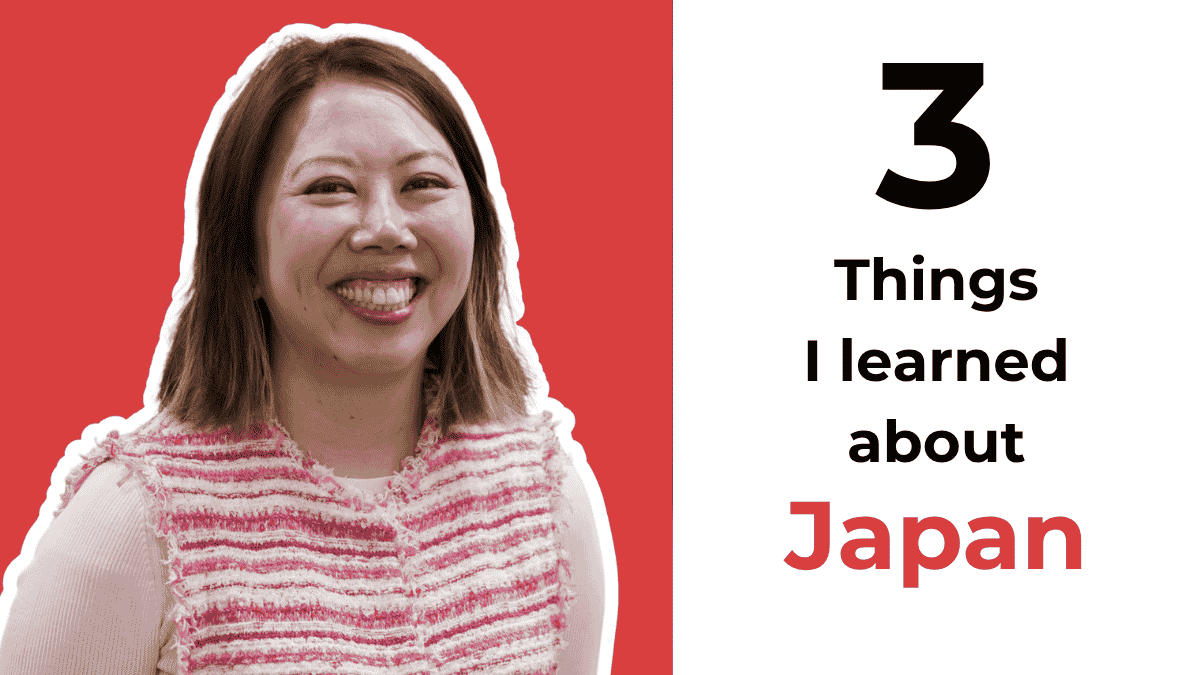
Leading in Japan requires more than global experience.
Japan is one of the world’s most attractive markets for global companies.
It is sophisticated, highly service-oriented, deeply relationship-driven, and full of opportunity for leaders who know how to operate here.
But for foreign leaders, Japan is a challenging place.
Ideas that seem clear in one culture are interpreted differently.
A positive response in a meeting does not actually mean agreement.
A slow-moving project is not stuck because people are resistant to change, but because the team is protecting the customer.
A proposal that looks strong on paper fails because the right conversations did not happen before the meeting.
At Build+, we often speak with leaders, job seekers, and companies who are trying to understand what it really takes to succeed in Japan.
In a recent conversation, Bryan Rios sat down with Diane Hughes, Managing Director and Founder of PTM Insights, to discuss leadership, coaching, and the cultural “landmines” that foreign leaders often step on without realizing it.
Diane has spent her career in HR, leadership development, and executive coaching across major global organizations, including JP Morgan, Goldman Sachs, Citi, Fidelity, McKinsey, Adobe, and MUFG.
Originally from New York, she has lived and worked in Hong Kong and Japan, giving her a unique perspective on how leadership expectations shift across cultures.
Her advice for leaders in Japan starts with three important concepts.
1. Honne and Tatemae: The True Voice and the Mask
One of the first concepts foreign leaders need to understand is honne and tatemae.
Put simply, honne refers to someone’s true feelings or real opinion. Tatemae refers to the public-facing response that helps maintain social harmony.
For people coming from more direct, low-context communication cultures, this can be difficult to read. In many Western business environments, people are trained to say what they mean. If they disagree, they may say so directly. If something is a problem, they are expected to raise it clearly.
In Japan, the communication style is often more subtle. This does not mean people are being dishonest. It means people may be trying to protect the relationship, preserve harmony, or avoid creating embarrassment in a group setting.
Diane shared a personal example from when she first came to Japan. During the height of summer, she arrived at the office without wearing pantyhose, despite having heard that women were generally expected to do so in that workplace context. A colleague commented that she was “brave” and “interesting.”
At the time, she took it as a compliment.
Only later did she realize that the comment was likely a very indirect way of saying: this is not appropriate, and someone needs to tell you without making you uncomfortable.
This kind of communication can show up in business meetings all the time.
A foreign leader may present a new idea and hear comments like:
“That’s interesting.”
“We’ll think about it.”
“That may be difficult.”
In some cultures, these comments sound positive, neutral, or like an invitation to keep problem-solving. In Japan, they may actually be warning signs. “Difficult” can mean “no.” “We’ll think about it” may mean the idea is unlikely to move forward. “Interesting” may mean people are unsure, uncomfortable, or unconvinced.
The danger is that foreign leaders may leave the room thinking they have agreement, while the local team leaves the room wondering how to politely stop the idea from moving forward.
The lesson is simple but important: do not rely only on face-value responses.
You need to slow down, ask better questions, observe body language, and create the kind of trust where people feel safe sharing what they really think. Sometimes the most important signal is not the words themselves, but the pause before the words, the hesitation, or the small facial expression that tells you something deeper is going on.
2. “The Customer Is God”: Why Quality Comes Before Speed
The second concept Diane highlighted is the famous Japanese phrase: okyakusama wa kamisama desu — “the customer is God.”
This idea is deeply embedded in Japanese service culture. You see it everywhere: in the efficiency of train stations, the cleanliness of hotels, the care shown in retail experiences, the precision of delivery services, and the attention to detail in customer-facing work.
For foreign leaders, this mindset can sometimes be misread as slowness, risk aversion, or resistance to innovation.
But that is not always what is happening.
In many global companies, launching a pilot or beta product with a major customer can be exciting. The customer may feel selected, included, and valued. In Japan, however, local teams may feel uncomfortable putting anything unfinished in front of an important customer.
The concern is not necessarily that the team dislikes innovation. The concern is that a poor customer experience could damage trust.
This applies not only to external customers, but also to internal customers. HR, finance, legal, IT, operations, and other support functions may all think carefully about who they serve inside the organization and how to deliver the highest possible level of quality.
That mindset can create incredible service standards. It can also create friction when global teams expect speed, experimentation, and quick iteration.
For example, a global team may ask Japan to join a pilot. Other markets may immediately nominate their biggest customers. Japan may nominate a smaller account or delay participation entirely. From the outside, this may look conservative. From the local team’s perspective, they may be protecting the customer, the brand, and the long-term relationship.
If you are leading Japan from outside the market, this is a critical distinction.
Instead of asking, “Why is Japan so slow?” you may need to ask:
“What risk does the team see that I am missing?”
“What would need to be true for the team to feel comfortable showing this to a customer?”
“Can we test this internally first before involving an external customer?”
“How can we protect the customer experience while still moving forward?”
When you understand the customer-first mindset, you can work with it instead of fighting against it.
3. Nemawashi: Why the Real Meeting Happens Before the Meeting
The third concept is nemawashi.
There is no perfect English translation, but the image behind the word is useful. It relates to preparing the roots of a tree before transplanting it. In business, it means preparing the ground before making a decision.
For many foreign leaders, a meeting is where an idea is introduced, debated, improved, and decided.
In Japan, that approach can backfire.
If you walk into a meeting and surprise everyone with a new proposal, people may not feel ready to respond. They may not want to disagree publicly. They may not want to challenge you in front of others. So instead, they may stay quiet, offer polite comments, or say the idea is “interesting.”
Then nothing happens.
Nemawashi means you do not wait until the formal meeting to build alignment. You speak with stakeholders beforehand. You ask for their views one-on-one. You understand concerns privately. You refine the proposal before it becomes public.
By the time you reach the formal meeting, the goal is not to shock the room with a new idea. The goal is to confirm a direction that people have already had time to understand, question, and support.
This can feel inefficient to leaders who are used to fast, open debate. But in Japan, it is often what makes execution possible.
Once people are aligned, the roots are strong. The commitment can be deep. Teams may go very far to make the decision successful because they were properly included in the process.
For leaders, the key lesson is this: if you want your idea to move forward in Japan, do not rely only on the meeting. Invest in the conversations before the meeting.
The Biggest Mistake Foreign Leaders Make in Japan
One of the most common mistakes foreign leaders make is assuming that smiles, politeness, and surface-level agreement mean everything is going well.
This is especially risky for regional or global leaders who visit Japan for only a few days.
Diane pointed out that many leaders fly in, pack their schedules with meetings, attend a few dinners, and leave after two or three days believing they understand the market. But local teams may spend weeks preparing for that visit. They may create decks, rehearse presentations, and carefully manage what is shown.
What the visiting leader sees may be more of a performance than the full reality.
If you truly want to understand the business, the customers, and the team, you need to spend more time in the market. You need to create space for informal conversations. You need to let the “mask” come off.
That does not happen in a tightly managed three-day visit.
It happens when you build relationships, listen carefully, and show people that you are not just there to inspect or instruct. You are there to understand.

The Skill Foreign Leaders Often Underestimate: Listening
In many global business cultures, leaders are rewarded for being decisive, direct, energetic, and fast-moving. Those qualities can be valuable in Japan too, but they need to be balanced with a strong ability to listen.
Diane described how Japanese leaders often have a powerful ability to sit in a room, ask thoughtful questions, listen deeply, and avoid filling every silence.
For many foreign leaders, silence feels uncomfortable. There is a temptation to keep talking, explain more, or jump in too quickly. But in Japan, silence can be productive. It can mean someone is thinking carefully. It can mean they are forming a complete thought. It can mean they are deciding how to respond in a way that is accurate and appropriate.
If you interrupt that silence too quickly, you may lose the opportunity to hear what someone really thinks.
Strong leadership in Japan requires you to become more comfortable with pauses. Ask the question, then wait. Give people time. Do not rush to fill the space.
The more you listen, the more you learn.
When Being a Foreigner Can Be an Advantage
Foreign leaders do not need to pretend to be Japanese. In fact, trying too hard to erase your own background can be counterproductive.
Your outside perspective can be valuable.
Diane noted that in some organizations, being non-Japanese allowed her to ask questions others may have found difficult to ask. It allowed her to challenge hierarchy in thoughtful ways. It gave her room to say, “Help me understand this,” or “Can you explain why this works this way?”
But that advantage only works when it is paired with humility.
You can ask direct questions, but you need to be thoughtful about the relationship. You can challenge assumptions, but you need to understand the context first. You can bring global experience, but you cannot assume that what worked elsewhere will automatically work in Japan.
The best foreign leaders are not the ones who abandon their own style completely. They are the ones who adapt without losing themselves.

Why Coaching Matters for Leaders in Japan
Leadership can be lonely anywhere. In Japan, it can feel especially isolating for foreign leaders who are navigating cultural expectations, communication differences, organizational complexity, and pressure from both local and global stakeholders.
This is one reason Diane founded PTM Insights, her executive coaching and leadership advisory practice.
The name PTM stands for “Play the Movie.” It comes from a phrase Diane uses with leaders when they are working through a challenge. The idea is to play the movie forward: look honestly at the current situation, understand where it is likely heading, and then decide whether that is the ending you want.
If not, you can rewrite the movie.
That is how Diane describes coaching. It is not therapy. It is not about treating someone as broken. It is about helping leaders access the answers they already have, make sense of what is happening, and expand their capacity for the situation in front of them.
For leaders entering a new role, taking on a bigger team, moving into Japan, or facing a major transition, coaching can be especially valuable. Too often, leaders wait until things are already painful before asking for help. But support is often most effective before the house is on fire.
A coach can help you understand your own reactions, identify the stories you may be telling yourself, challenge your assumptions, and build the internal capacity you need for the next stage of leadership.
As Diane put it, sometimes you are not broken. You are simply operating on an old system. You need to upgrade your internal OS.
Final Advice: Do Not Be Afraid to Ask for Help
When asked what advice she would give to foreign leaders in Japan, Diane’s answer was simple:
Do not be afraid to ask for help.
Many leaders feel pressure to appear fully put together. They believe they need to have all the answers. But leadership in Japan requires constant learning. You need cultural humility, self-awareness, patience, and the willingness to seek guidance from people who understand the market.
Japan rewards leaders who do the work.
If you take time to understand honne and tatemae, you will become better at reading the room. If you appreciate the depth of customer commitment, you will understand why quality and trust matter so much. If you practice nemawashi, you will build stronger alignment and avoid unnecessary resistance. If you listen more deeply, you will uncover the real issues beneath the surface.
And if you ask for help early, you give yourself a much better chance of succeeding.
For global companies, Japan is not a market you can lead from a distance with assumptions. It is a market where trust, preparation, and relationships matter.
For foreign leaders, that is not a barrier.
It is the opportunity.